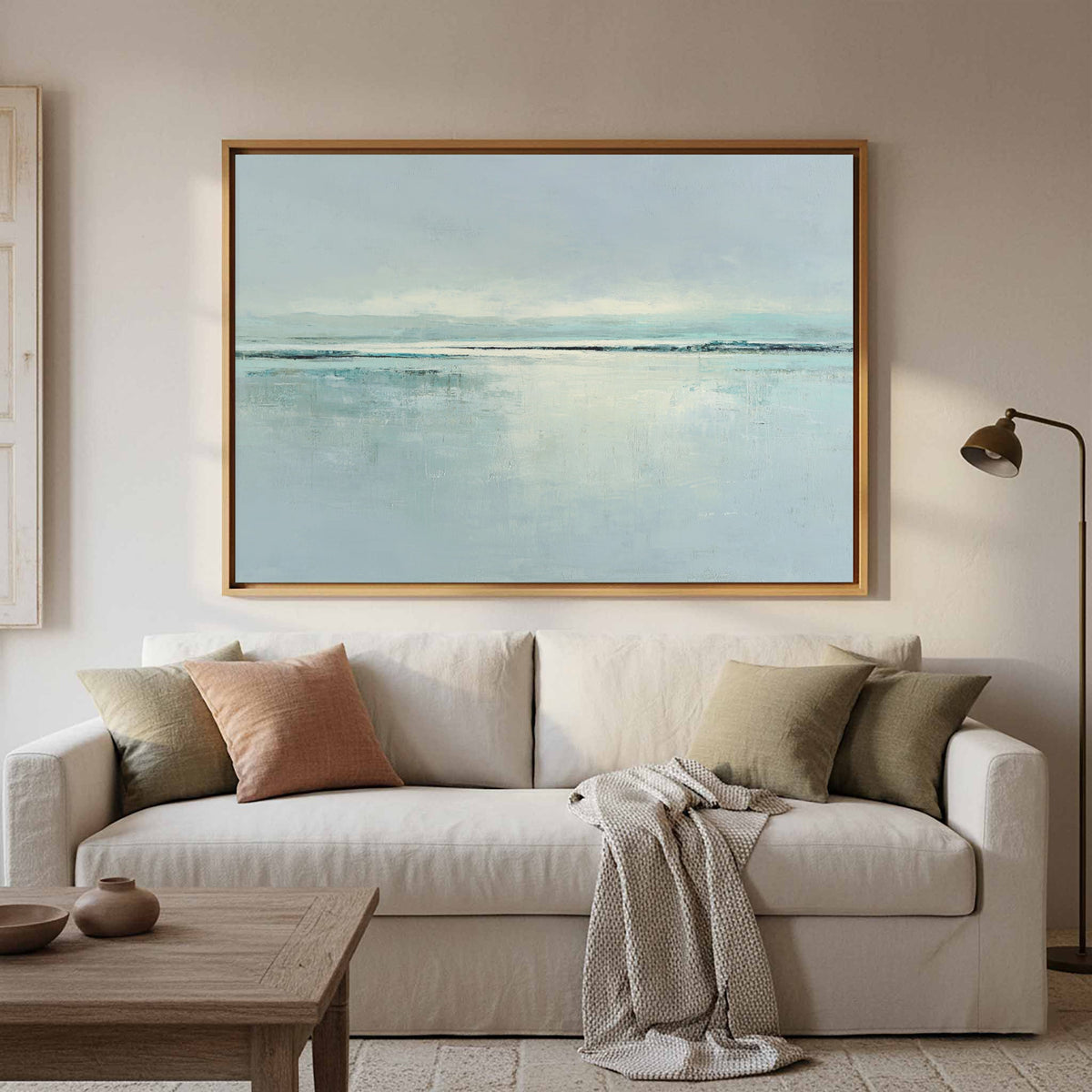
Coastal Wall Art Beyond Summer
By: Canvora | October 2026
Coastal wall art does not have to announce a summer holiday. A shoreline can be interesting because of its open space, the meeting of land and water, or a familiar view you want to remember. Those qualities can work in an everyday living room far from the beach. Instead of building around shells and slogans, begin with the structure of the image. Ask what draws your eye and what you would like that part of the room to feel like throughout the year.
Choose a landscape before a theme
Separate the subject from the decorating shorthand around it. You might like a distant horizon but dislike a room filled with nautical objects. You might prefer a sheltered shore to a dramatic wave. Look closely at the balance of sky, water, and land in each candidate. A spacious composition and a densely detailed scene ask for different surroundings. Choose the image first, then decide which existing objects support it. There is no requirement to repeat the coast literally elsewhere in the room.
Use the horizon as a visual clue
A horizon can provide a strong horizontal line, but its position within an artwork varies. Consider how it relates to nearby shelves, window sills, and furniture edges. Several almost-aligned lines can look accidental. You can either create a clear relationship or allow enough separation that the lines read independently. Test this in a straight-on room photograph. Do not crop a product image to force a better composition; the actual printed image and its selected proportions are what will appear on your wall.
Balance openness with everyday texture
If the image feels visually open, the rest of the room does not need to be empty. Books, a useful lamp, and furniture you love can give it everyday context. Try removing only the objects immediately competing with the artwork before making larger changes. A coastal image can sit beside dark furniture as well as pale furniture; assess the contrast in your own space. The goal is a readable focal area, not a catalog-perfect interior where nothing can be touched or used.
Check the wall after sunset
A room that feels bright at noon can look very different on a winter evening. Preview the intended wall using the lamps you normally switch on, and notice whether reflections or shadows make the location awkward to view. A product photograph cannot predict the appearance of every finish under your lighting. Ask about the selected format if that detail matters to your decision. You are evaluating a practical viewing position, not assuming that the artwork will change the amount of light entering the room.
Keep one year-round anchor
Let the art be the stable element while smaller accessories respond to the season. A lighter arrangement on a console may suit warmer months; books or a textured throw can change the surroundings later. Avoid covering the image with seasonal garlands or placing damp greenery against it. If you decide to swap artwork, plan where the unused piece will be safely stored first. A year-round arrangement succeeds when you still like the view after the temporary decorations have been put away.
A starting point to compare
Explore Tranquil Coastal Landscape Art as one possible direction, then compare the artwork with your own room. Read the selected product options for the physical format, available dimensions, and what is included; a styling example does not establish those details.
Keep planning your room
For a broader palette decision, read How to Choose Wall Art Colors for Your Room.
Get Design Tips
New journal posts, room ideas and gallery walls, by email
More from the Journal
-
 Going Big: When One Large Piece Beats Several Small Ones
October 27, 2026
One 48 × 32 or 60 × 40 piece can do more for a wall than a cluster of small ones. How to tell when, and...
-
 Landscape, Portrait or Square: Choosing Orientation for Your Wall
October 27, 2026
Wide walls suit landscape, narrow walls suit portrait, and square sits between. How to pick the shape that fits the wall you have.
-
 Nursery and Kids' Room Art That Grows With Them
October 27, 2026
Soft palettes, storybook animals and secure hanging help a child's room art last from nursery to big-kid bedroom.