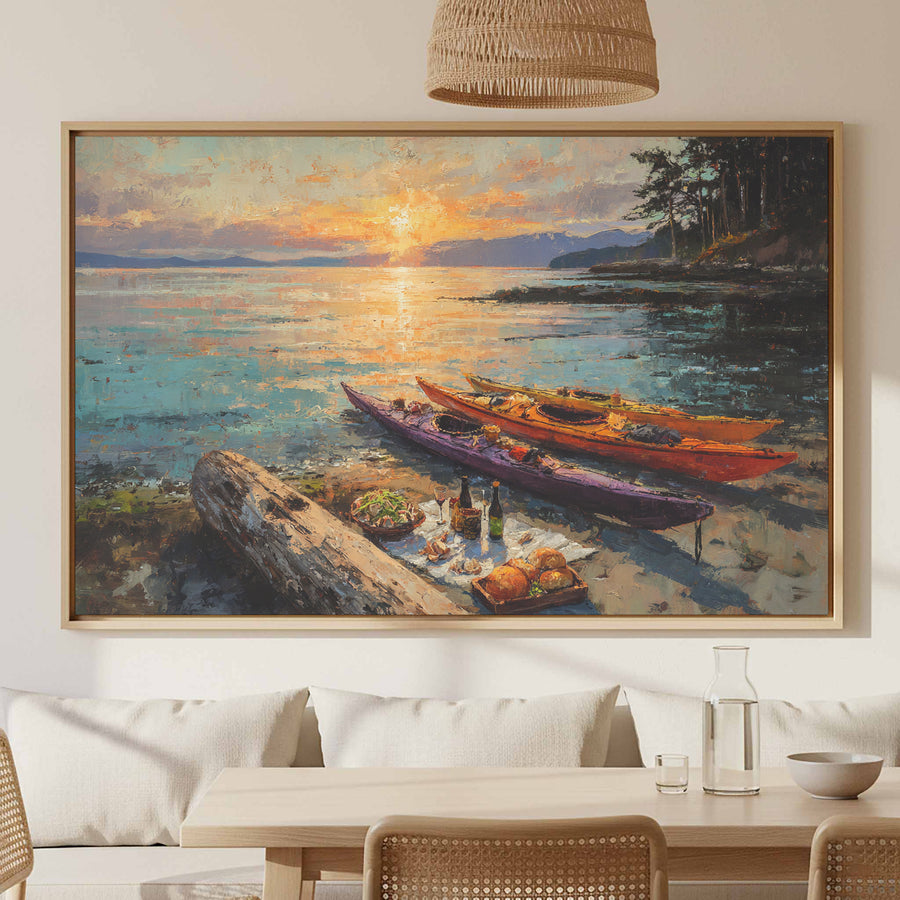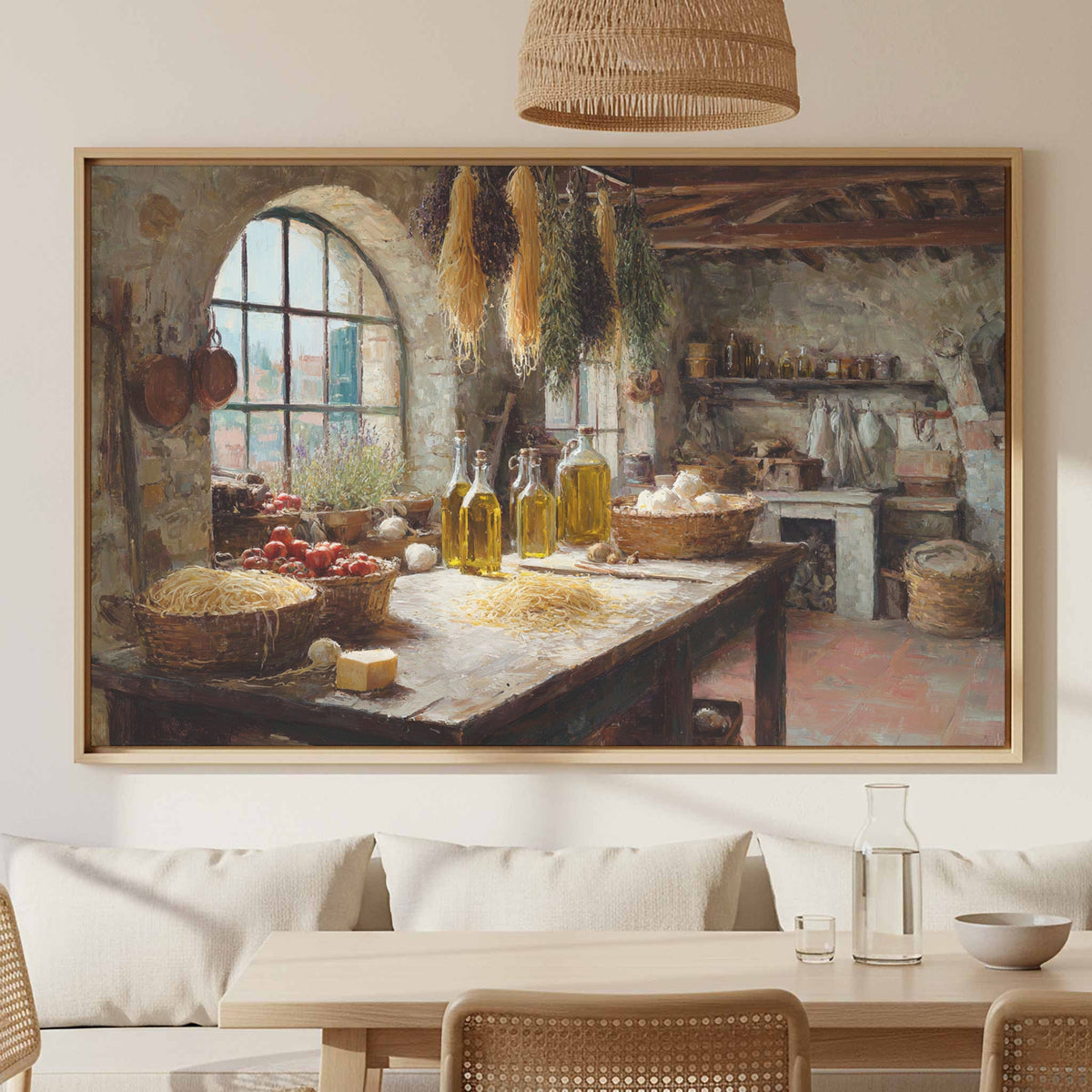
Style a Dining Room Wall for Everyday Use
By: Canvora | October 2026
A dining room wall has to work during ordinary meals as well as the occasional gathering. That makes it worth judging from a chair, not only from the doorway. Guests may look toward the artwork for a long time, while a sideboard, pendant, or centerpiece can interrupt the view. Before choosing a piece, set the room up as you usually use it. Pull the chairs out, put the everyday objects back, and notice which wall remains visually available once people are actually seated.
Choose the main viewing position
Walk around the table and sit in more than one place. A wall that looks generous from the entrance may be partly hidden behind a light fitting from the far seat. You cannot guarantee an identical view for everyone, but you can avoid a position that is awkward from most chairs. Take a photograph at seated height and use it to compare options. This is particularly helpful when a dining area shares an open-plan space and its artwork is also visible from the kitchen or sofa.
Give the table and the art different jobs
A highly patterned table setting already adds detail. If you use one often, consider whether the wall should provide a simpler background. If your table is usually clear, the artwork can carry more of the visual interest. There is no need to match the outline of a round table with round imagery or a long table with a panoramic scene. Instead, examine how the shapes relate from the main viewpoint. Clear relationships matter more than following a formula based only on furniture type.
Check the sideboard as a complete composition
When artwork sits above a sideboard, include the objects you keep there in the plan. Serving dishes, a lamp, or tall stems can overlap the picture unexpectedly. Test the arrangement with those objects in position, and leave practical working space for setting down food or clearing plates. The art should not force you to use a useful surface awkwardly. If seasonal displays regularly occupy the sideboard, reserve a separate area for them rather than depending on the whole surface staying permanently empty.
Evaluate evening light without guessing the finish
Many dining rooms are used most after sunset. Turn on the lights you normally use for dinner and look for strong glare, shadows, or direct illumination in the intended location. A product’s response depends on its actual format and finish, so avoid treating one styled photograph as a promise about your room. If the listing does not answer a finish question, ask before ordering. Keep artwork away from heat, splashes, and candles; visual balance should never require placing a piece in an unsuitable spot.
Let hosting be a variation, not a redesign
For holiday meals, you can change the table while leaving the wall alone. Pick temporary accents that work with the established room instead of expecting the artwork to match every celebration. Before a larger gathering, check the display with the table extended and extra chairs in place. A good everyday arrangement should still feel coherent when the room is busier. After guests leave, the piece should be something you enjoy with a simple breakfast, not merely a backdrop for one special event.
A starting point to compare
Explore Bold Abstract Art as one possible direction, then compare the artwork with your own room. Read the selected product options for the physical format, available dimensions, and what is included; a styling example does not establish those details.
Keep planning your room
For a broader palette decision, read How to Choose Wall Art Colors for Your Room.
Get Design Tips
New journal posts, room ideas and gallery walls, by email
More from the Journal
-
 Going Big: When One Large Piece Beats Several Small Ones
October 27, 2026
One 48 × 32 or 60 × 40 piece can do more for a wall than a cluster of small ones. How to tell when, and...
-
 Landscape, Portrait or Square: Choosing Orientation for Your Wall
October 27, 2026
Wide walls suit landscape, narrow walls suit portrait, and square sits between. How to pick the shape that fits the wall you have.
-
 Nursery and Kids' Room Art That Grows With Them
October 27, 2026
Soft palettes, storybook animals and secure hanging help a child's room art last from nursery to big-kid bedroom.